
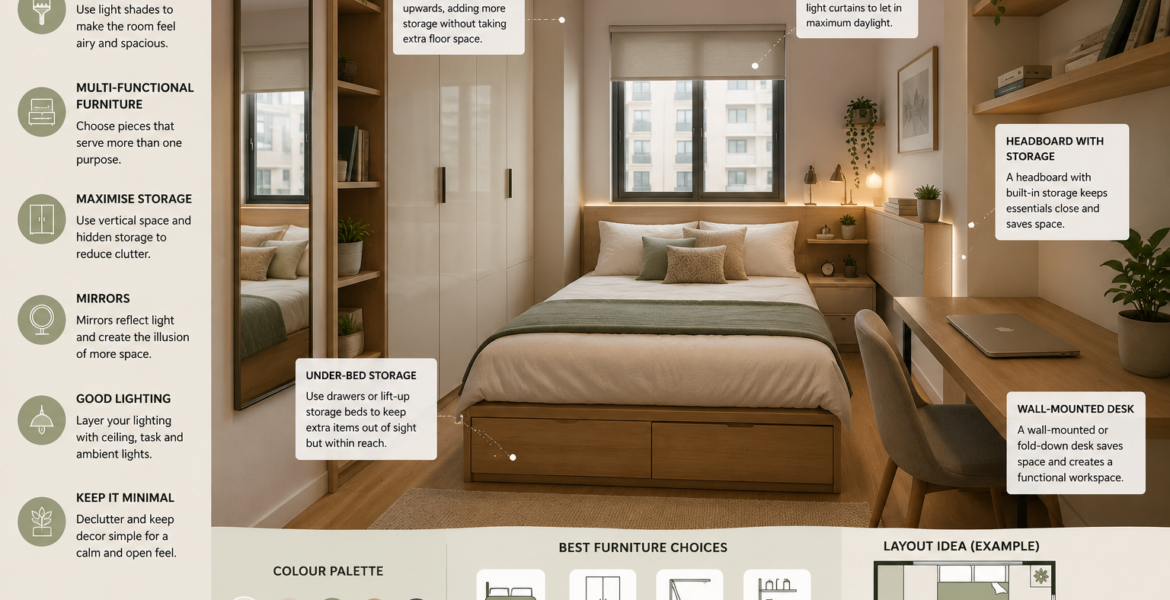
Designing a bedroom in a small flat requires maximising storage, using multifunctional furniture, and choosing light colours to create a spacious, clutter-free, and comfortable environment while making the room feel bigger and more functional.
Designing a bedroom in a small flat can feel challenging, especially in many UK homes where space is limited and every square metre matters. Whether you live in a city apartment, studio flat, or compact terrace property, creating a comfortable and stylish bedroom is entirely possible with smart planning and practical design choices. The key is to maximise space, improve storage, and maintain a relaxing atmosphere without overcrowding the room.
In 2026, more UK homeowners and renters are prioritising efficient layouts, multifunctional furniture, and minimalist décor to make small bedrooms feel larger and more functional. With rising property prices and smaller living spaces becoming common in urban areas, learning how to design a bedroom in a small flat has become an essential skill for modern living.
This comprehensive UK space-saving guide will help you transform even the smallest bedroom into a practical, organised, and visually appealing space. From layout planning and storage solutions to lighting and colour choices, you will discover proven strategies that make a real difference.
Why Small Bedroom Design Matters in UK Flats
Many UK flats, particularly in cities, have bedrooms that measure between 6 and 10 square metres. In such limited spaces, poor design can quickly lead to clutter, discomfort, and a lack of storage. A well-designed bedroom, however, can improve daily life, enhance sleep quality, and even increase property value.
Small bedroom design matters because it helps:
Maximise available space
Improve organisation and storage
Create a relaxing sleeping environment
Enhance comfort and functionality
Increase the visual appeal of the room
With the right strategy, even the smallest bedroom can feel spacious and inviting.
Step 1: Plan the Layout Before Buying Furniture
The layout is the foundation of any successful small bedroom design. Before purchasing furniture, it is important to measure the room carefully and decide how each item will fit.
Start by identifying:
Room dimensions
Window and door positions
Power socket locations
Natural light sources
Available wall space
Placing furniture in the wrong position can make the room feel cramped, so planning ahead saves time and money.
Popular Layout Tips for Small Bedrooms
Position the bed against the longest wall to create more walking space. Keep pathways clear and avoid placing bulky furniture near the entrance. If possible, choose furniture that fits neatly into corners or along walls.
A simple and balanced layout makes the room feel larger and easier to use.
Step 2: Choose Space-Saving Furniture
Furniture selection plays a major role in small bedroom design. Bulky or oversized pieces can overwhelm a compact room, while space-saving furniture helps maintain comfort and functionality.
Best Space-Saving Furniture Ideas
Storage beds with built-in drawers
Wall-mounted bedside tables
Foldable desks or tables
Slim wardrobes
Ottoman beds
Murphy beds (fold-down beds)
Multifunctional furniture is particularly useful because it serves more than one purpose, reducing the number of items in the room.
For example, a storage bed can replace a chest of drawers, freeing up valuable floor space.
Step 3: Use Vertical Storage to Maximise Space
When floor space is limited, the best solution is to use vertical storage. This means making use of walls and height rather than expanding horizontally.
Vertical storage helps keep the room organised without making it feel crowded.
Effective Vertical Storage Solutions
Tall wardrobes
Wall shelves
Floating shelves
Over-the-door organisers
Wall-mounted cabinets
Hanging storage units
Using vertical storage keeps items accessible while maintaining a clean and tidy appearance.
Step 4: Choose Light Colours to Make the Room Feel Bigger
Colour has a powerful effect on how a room feels. Light colours reflect more light, making a small bedroom appear larger and brighter.
Best Colours for Small Bedrooms
White
Light grey
Beige
Soft pastels
Cream
These colours create a calm and airy atmosphere.
Dark colours can still be used, but they should be applied carefully, such as on a feature wall or decorative accessories.
Step 5: Use Mirrors to Create the Illusion of Space
Mirrors are one of the simplest and most effective tools for making a small bedroom feel larger. They reflect light and create the illusion of depth.
Where to Place Mirrors
Opposite a window
On wardrobe doors
Above a dresser
On a feature wall
A well-placed mirror can instantly make a room feel brighter and more spacious.
Step 6: Keep the Design Minimal and Clutter-Free
Clutter is one of the biggest challenges in small bedrooms. Too many items can make the space feel cramped and uncomfortable.
Minimalist design focuses on keeping only essential items and maintaining a clean, organised environment.
Tips to Reduce Clutter
Store items in hidden storage
Use organisers and storage boxes
Avoid unnecessary furniture
Keep surfaces clear
Donate unused items
A clutter-free room feels more relaxing and easier to maintain.
Step 7: Use Smart Lighting to Improve Space and Comfort
Lighting plays a crucial role in bedroom design. Proper lighting can make a small room feel larger, brighter, and more welcoming.
Best Lighting Options for Small Bedrooms
Wall-mounted lights
LED strip lighting
Pendant lights
Under-shelf lighting
Table lamps
Layered lighting, which combines different types of lights, creates depth and improves functionality.
Natural light should also be maximised by keeping windows clear and using light curtains.
Step 8: Choose the Right Bed Size
The bed is the largest piece of furniture in a bedroom, so selecting the correct size is essential.
Recommended Bed Sizes for Small UK Bedrooms
Single bed – Best for very small rooms
Small double bed – Ideal for compact flats
Double bed – Suitable for medium-sized bedrooms
Ottoman bed – Best for storage and space efficiency
Choosing a bed that fits the room properly ensures comfortable movement and better space utilisation.
Step 9: Use Sliding Doors Instead of Hinged Doors
Traditional hinged doors require space to open, which can reduce usable floor area. Sliding doors are a practical alternative for small bedrooms.
Benefits of Sliding Doors
Save floor space
Improve accessibility
Create a modern appearance
Reduce clutter
Sliding wardrobe doors are especially popular in modern UK flats.
Step 10: Add Multi-Functional Décor
Decorative elements can also serve practical purposes. Multi-functional décor helps maintain style without sacrificing space.
Examples of Multi-Functional Décor
Storage benches
Decorative baskets
Foldable mirrors
Wall hooks
Bedside organisers
These items enhance both functionality and visual appeal.
Common Mistakes to Avoid When Designing a Small Bedroom
Even small design errors can have a big impact on comfort and usability.
Mistakes to Watch Out For
Using oversized furniture
Blocking natural light
Ignoring storage needs
Choosing dark colours for the entire room
Overcrowding the space
Avoiding these mistakes helps maintain a balanced and practical design.
How Much Does It Cost to Design a Small Bedroom in the UK?
Bedroom design costs vary depending on furniture, materials, and décor choices.
Average Bedroom Design Costs in the UK (2026)
Budget design: £500 to £1,500
Mid-range design: £1,500 to £4,000
Premium design: £4,000 to £8,000+
These costs typically include furniture, storage solutions, lighting, and decoration.
Planning a realistic budget ensures a smoother design process.
Small Bedroom Design Trends in the UK for 2026
Modern bedroom design continues to evolve, with a focus on comfort and efficiency.
Popular Trends
Minimalist interiors
Neutral colour palettes
Hidden storage solutions
Smart furniture
Sustainable materials
Space-saving layouts
These trends reflect the growing demand for practical and stylish living spaces.
Many home improvement companies, including brands such as Glam Kitchens, are expanding their services to include space-efficient interior design solutions for modern flats.
Final Thoughts: How to Design a Bedroom in a Small Flat
Designing a bedroom in a small flat does not require a large budget or complicated renovations. With thoughtful planning and smart design choices, even the smallest room can become comfortable, functional, and visually appealing.
The most important principles are simple:
Use space-saving furniture
Maximise storage
Keep the layout simple
Choose light colours
Maintain a clutter-free environment
By following these strategies, you can transform a compact bedroom into a practical and relaxing space that meets your daily needs.
Frequently Asked Questions
How do you make a small bedroom look bigger in the UK?
Use light colours, mirrors, vertical storage, and minimal furniture to create the illusion of more space and improve room brightness.
What furniture is best for a small bedroom?
Multifunctional furniture such as storage beds, wall-mounted shelves, and slim wardrobes works best for small bedrooms because it saves space.
What is the best bed for a small flat bedroom?
A storage bed or ottoman bed is the best choice because it provides extra storage without taking up additional floor space.
How can I add storage to a small bedroom?
Use vertical storage, under-bed drawers, wall shelves, and organisers to maximise storage without overcrowding the room.
What colours are best for small bedrooms?
Light colours such as white, cream, beige, and soft grey are ideal because they reflect light and make the room feel larger.


