
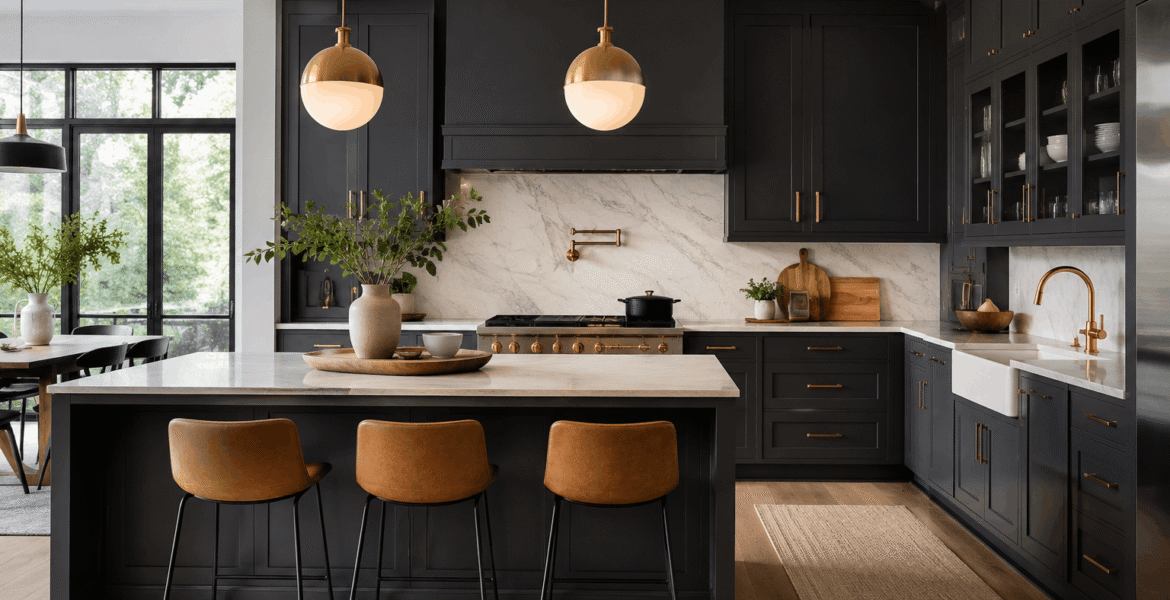
Charcoal kitchen cabinets sit comfortably between classic grey and dramatic black, making them an appealing choice if you want a kitchen that feels sophisticated without becoming overpowering.
Their versatility is one of their biggest strengths. Charcoal can work with pale quartz, natural timber, warm metallics, crisp white walls and even stronger colours such as navy or deep green. Depending on the materials and finishes surrounding it, the same charcoal cabinetry can feel contemporary, industrial, traditional or understated.
If you are planning a kitchen renovation and wondering how to make darker cabinetry work in your space, these charcoal kitchen cabinet ideas offer plenty of inspiration.
Why Choose Charcoal Kitchen Cabinets?
Charcoal is darker and more dramatic than standard grey but usually softer than pure black. This makes it relatively easy to introduce depth without allowing the cabinetry to dominate the entire room.
Charcoal cabinets can work particularly well because they:
- Create strong contrast against pale walls and worktops;
- Complement natural timber beautifully;
- Suit both modern and traditional cabinet styles;
- Provide a sophisticated backdrop for metallic hardware;
- Pair well with a wide range of flooring materials;
- Can be used throughout the kitchen or as an accent colour.
The key is balancing the darker cabinetry with the right lighting, surfaces and complementary shades.
1. Pair Charcoal Cabinets with White Quartz Worktops
One of the easiest ways to balance charcoal cabinetry is with a light worktop.
White or off-white quartz provides a clean contrast against dark grey doors while helping the kitchen feel brighter. This combination works particularly well in contemporary kitchens where simple lines and uncluttered surfaces are important.
You could continue the pale finish onto the splashback for a seamless appearance or introduce subtle veining for additional character.
For a softer result, consider warm white rather than an extremely stark white. It can prevent the overall design from feeling too clinical.
2. Combine Charcoal Cabinets with Natural Wood
Charcoal and timber make an excellent pairing because the warmth of natural wood softens the coolness of dark grey.
Wood can be introduced through:
- Worktops
- Open shelving
- Flooring
- Breakfast bars
- Dining furniture
- Wall panelling
Oak is particularly effective when you want a warm, welcoming kitchen, while darker timbers can create a richer and more luxurious appearance.
A kitchen with charcoal base cabinets, timber shelving and pale walls can also feel considerably lighter than one where every surface uses a dark finish.
3. Create a Two-Tone Kitchen
You do not need to use charcoal on every cabinet.
A two-tone kitchen is an excellent solution when you like darker cabinetry but are concerned that a full charcoal scheme may feel too heavy.
For example, use charcoal on the lower cabinets while keeping wall units white, cream or light grey.
This draws visual weight towards the bottom of the room while maintaining a brighter appearance at eye level.
Another option is to use charcoal exclusively on a kitchen island, creating a focal point while keeping the perimeter cabinetry lighter.
4. Add Brass or Bronze Handles
Hardware can completely change the personality of charcoal kitchen cabinets.
Warm brass, antique brass or bronze handles provide an attractive contrast against dark grey doors and can make the kitchen feel warmer.
This works particularly well with:
- Shaker-style cabinetry;
- Marble-effect worktops;
- Timber flooring;
- Traditional taps;
- Pendant lighting.
If you want something more understated, brushed brass tends to feel softer than highly polished finishes.
For a contemporary look, slim bar handles or minimalist knobs can provide just enough metallic detail without overpowering the cabinetry.
5. Go Handleless for a Contemporary Charcoal Kitchen
Charcoal is particularly effective in modern handleless kitchens.
Without visible handles interrupting the cabinet fronts, the dark colour becomes part of a clean architectural design.
Flat-front charcoal cabinetry can be combined with:
- Integrated appliances;
- Pale quartz surfaces;
- Concealed storage;
- Recessed lighting;
- Large-format flooring.
This approach works especially well in open-plan kitchens where you want the cabinetry to look more like fitted furniture than a collection of individual cupboards.
A matt finish can further soften the darker colour while giving the room a contemporary appearance.
6. Use Charcoal Shaker Cabinets for a Classic Look
Charcoal does not have to mean ultra-modern.
Shaker kitchen cabinets in charcoal grey provide a strong combination of traditional detailing and contemporary colour.
The framed door design adds texture and character, while the dark grey finish prevents the kitchen from feeling overly traditional.
Pair charcoal Shaker cabinetry with:
- Warm white walls
- Timber or stone-effect flooring
- Ceramic sinks
- Traditional-style taps
- Brass or nickel hardware
This combination can work particularly well in period properties where a completely minimalist kitchen may feel slightly out of place.
7. Make a Charcoal Kitchen Island the Focal Point
If you are hesitant about installing an entire charcoal kitchen, start with the island.
A charcoal kitchen island can create visual contrast without making the overall room too dark.
For example, you might combine:
Perimeter cabinets: warm white
Kitchen island: charcoal grey
Worktop: pale quartz
Flooring: natural timber
This approach gives the room a clear focal point while allowing the surrounding cabinetry to reflect more light.
Pendant lighting above the island can further emphasise the contrast and help define the central area.
8. Combine Charcoal Cabinets with a Marble-Effect Splashback
A marble or marble-effect splashback can add movement and visual interest to a charcoal kitchen.
White surfaces with grey or warm veining naturally connect with charcoal cabinetry while preventing the room from becoming too flat.
For a more luxurious appearance, the same surface can be used for both the worktop and splashback.
This reduces the number of competing materials in the kitchen and allows the cabinetry to stand out.
If genuine natural stone is not suitable for your budget or maintenance preferences, quartz and porcelain surfaces can provide alternative finishes with a similar visual effect.
9. Create an Industrial-Style Charcoal Kitchen
Charcoal cabinetry is an obvious fit for industrial-inspired interiors.
Combine it with materials such as:
- Exposed brick
- Concrete-effect surfaces
- Black metal
- Timber
- Dark-framed glazing
The challenge with industrial schemes is preventing the kitchen from becoming visually heavy.
Rather than making every element dark, balance charcoal cabinets and black details with warmer timber or pale walls.
Good lighting is particularly important here. Pendant lights, under-cabinet lighting and natural daylight can stop deep colours and textured surfaces from absorbing too much light.
10. Use Charcoal Cabinets in a Small Kitchen Carefully
Dark cabinetry is not limited to large kitchens.
Charcoal can work in a smaller space when used strategically.
One effective approach is to keep the upper half of the kitchen lighter. Charcoal base units can provide depth while white walls, pale splashbacks and light wall cabinets help maintain an open feeling.
Reflective or lightly polished surfaces can also distribute available light around the room.
In smaller kitchens, pay particular attention to:
- Natural light;
- Cabinet placement;
- Wall colours;
- Worktop colour;
- Flooring;
- Artificial lighting.
The goal is contrast rather than darkness everywhere.
What Colours Go Best with Charcoal Kitchen Cabinets?
Charcoal is surprisingly flexible, but different combinations create very different moods.
Colour or Material | Effect with Charcoal |
White | Crisp, clean contrast |
Warm white | Softer and more welcoming |
Natural oak | Warm and balanced |
Brass | Elegant and luxurious |
Black | Dramatic and contemporary |
Pale grey | Calm and tonal |
Marble effect | Refined and sophisticated |
Sage green | Soft, natural contrast |
Navy | Deep and dramatic |
Concrete effect | Modern and industrial |
When choosing colours, consider the room as a whole rather than selecting each finish separately.
Cabinet colours can look quite different depending on natural daylight, artificial lighting and neighbouring materials.
Matt or Gloss Charcoal Cabinets?
Both finishes can work, but they produce noticeably different results.
Matt Charcoal Cabinets
Matt cabinetry provides a softer and more understated appearance. It suits contemporary, Shaker and minimalist kitchens and can make a dark shade feel less visually intense.
Gloss Charcoal Cabinets
Gloss surfaces reflect more light and can create a sharper, more contemporary appearance.
However, reflections, fingerprints and marks may be more noticeable depending on the exact finish.
For many modern kitchens, matt or low-sheen charcoal provides a versatile middle ground.
How Do You Stop a Charcoal Kitchen Looking Too Dark?
The biggest concern with dark cabinets is usually light.
Fortunately, there are several ways to keep the kitchen balanced.
Choose Lighter Worktops
White, cream or pale stone-effect worktops provide immediate contrast.
Use Layered Lighting
Do not rely solely on one ceiling fitting.
Consider a combination of:
- Ceiling lights
- Pendant lighting
- Under-cabinet lighting
- Task lighting
- Natural daylight
Keep Some Surfaces Light
If your cabinets are charcoal, your walls, splashback or flooring do not necessarily need to be dark too.
Add Warm Materials
Timber, brass and warm-toned accessories can prevent charcoal from appearing cold.
Test Samples in Your Own Kitchen
A colour that looks medium grey in a bright showroom can appear much darker in a north-facing kitchen.
Always view cabinet and worktop samples in the actual room at different times of day before making a final decision.
Common Mistakes to Avoid with Charcoal Kitchen Cabinets
Charcoal is versatile, but a few design mistakes can make it harder to use successfully.
Avoid:
- Choosing dark cabinets, walls, floors and worktops without considering balance;
- Ignoring the amount of natural light available;
- Selecting cabinet colours from a screen rather than physical samples;
- Mixing too many competing finishes;
- Forgetting task lighting beneath wall cabinets;
- Choosing hardware without testing it against the cabinet finish;
- Assuming every shade of charcoal has the same undertone.
Some charcoal colours lean noticeably blue, while others have warmer brown or green undertones. These differences become much more obvious when placed beside worktops, walls and flooring.
Are Charcoal Kitchen Cabinets a Good Choice?
Charcoal kitchen cabinets are a strong option if you want something more distinctive than pale grey but less severe than pure black.
They can suit both contemporary and traditional interiors, and there are plenty of ways to adjust the look according to your space.
For a light and modern kitchen, combine charcoal with white quartz and simple hardware. For something warmer, introduce natural timber and brass. If you prefer a classic look, charcoal Shaker cabinetry can provide depth while retaining traditional detailing.
The most successful designs balance colour, texture and light rather than allowing the dark cabinetry to do all the visual work.
Conclusion
There are plenty of ways to use charcoal kitchen cabinet ideas without creating a kitchen that feels gloomy or overly dramatic.
From charcoal islands and two-tone schemes to natural timber, pale quartz and warm metallic hardware, the right supporting materials can make dark grey cabinetry feel elegant, balanced and practical.
Before committing to a design, consider the amount of natural light in your kitchen, test samples alongside your chosen worktop and flooring, and think carefully about how the space will look during both daytime and evening use.
If you are planning a new kitchen and want help choosing cabinetry, finishes and a layout that suits your home, speak to an experienced kitchen designer or installer to explore the options available for your space.


