
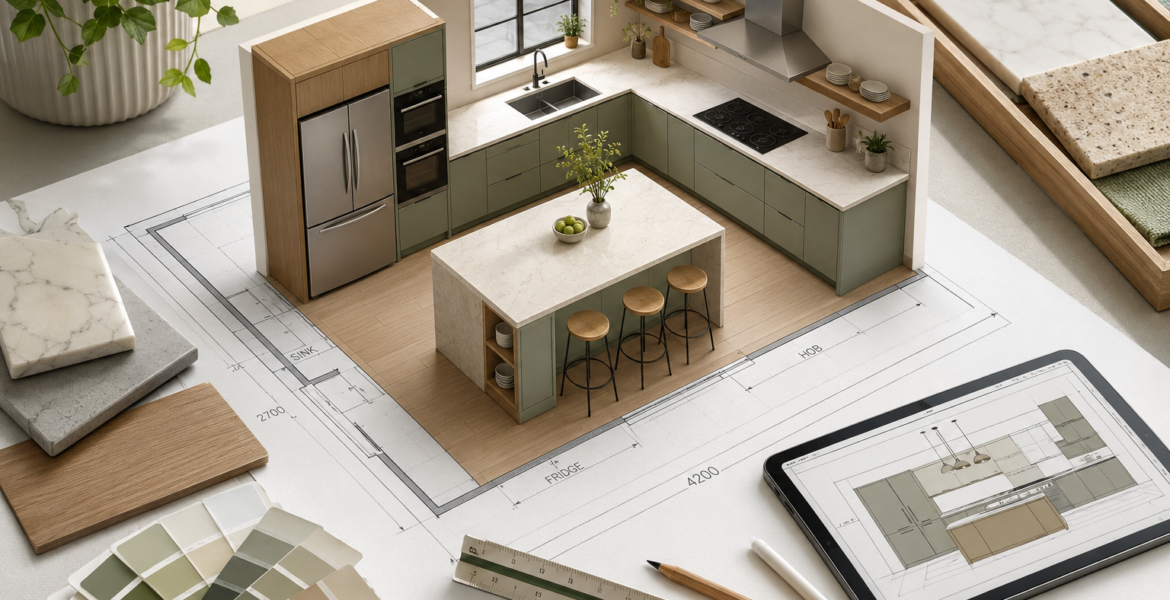
To design your own kitchen layout, measure your space accurately, choose the right layout style, plan the work triangle, and position appliances correctly, ensuring proper storage, lighting, and ventilation to create a functional and comfortable kitchen.
Designing your own kitchen layout can feel like a challenging task, but with the right planning and understanding of space, functionality, and workflow, it is entirely achievable. A well-designed kitchen layout improves efficiency, comfort, and the overall appearance of your home. In the UK, homeowners are increasingly choosing to plan their own kitchens before working with installers or designers, as it helps them control costs and create a space tailored to their lifestyle.
Whether you are renovating an existing kitchen or designing a brand-new one, the layout is the foundation of the entire space. It determines how easily you can cook, clean, store items, and move around the room. In this comprehensive step-by-step guide, you will learn exactly how to design your own kitchen layout, understand the most popular kitchen layouts in the UK, and discover practical tips to create a functional and modern kitchen.
Why Kitchen Layout Design Matters
The layout is the most important part of any kitchen. Even the most expensive cabinets and appliances will not perform well if the layout is poorly planned. A smart layout ensures that daily tasks such as cooking, cleaning, and storing food are simple and efficient.
A well-designed kitchen layout can:
Improve workflow and efficiency
Maximise available space
Increase property value
Enhance comfort and safety
Reduce renovation costs
In modern UK homes, the kitchen is often the centre of daily life, so investing time in planning the layout is essential.
Step 1: Measure Your Kitchen Space Accurately
The first and most important step in designing your own kitchen layout is measuring the space correctly. Accurate measurements prevent costly mistakes and ensure cabinets and appliances fit perfectly.
Key measurements to take include:
Room length and width
Ceiling height
Window and door positions
Wall angles and corners
Existing plumbing and electrical points
Always measure twice to confirm accuracy. Even small measurement errors can lead to installation problems later.
Tip for UK Homeowners
Use graph paper or digital planning tools to sketch your kitchen. This helps visualise the layout before purchasing materials.
Step 2: Understand the Kitchen Work Triangle
The kitchen work triangle is a classic design principle that focuses on the relationship between three key areas:
Sink
Hob
Refrigerator
These three points form a triangle that represents the main workflow in the kitchen. Keeping these elements within a comfortable distance improves efficiency and reduces unnecessary movement.
Ideal Work Triangle Guidelines
Each side of the triangle should be between 1.2 and 2.7 metres
The total distance should be between 4 and 8 metres
There should be no obstacles blocking movement
This simple concept remains one of the most effective ways to design a functional kitchen layout.
Step 3: Choose the Right Kitchen Layout Style
Selecting the correct layout style is essential for making the most of your space. The best layout depends on the size and shape of your kitchen.
Popular Kitchen Layouts in the UK
One-Wall Kitchen
This layout places all cabinets and appliances along a single wall. It is commonly used in small flats or studio apartments.
Best for:
Small kitchens
Open-plan spaces
Budget-friendly designs
Galley Kitchen
A galley kitchen features two parallel walls with a walkway in between.
Best for:
Narrow kitchens
Efficient workflow
Compact homes
L-Shaped Kitchen
This layout uses two adjacent walls to create an L shape.
Best for:
Medium-sized kitchens
Open-plan living
Flexible design
U-Shaped Kitchen
A U-shaped kitchen surrounds the user on three sides.
Best for:
Large kitchens
Maximum storage
Multiple users
Island Kitchen
An island kitchen includes a central unit that provides additional workspace and seating.
Best for:
Modern homes
Entertaining guests
Extra storage
Choosing the right layout is one of the most important decisions in kitchen design.
Step 4: Plan Appliance Placement Carefully
Appliances play a major role in kitchen functionality. Their placement should support the work triangle and make daily tasks easier.
Common appliance placement tips include:
Position the fridge near the entrance
Place the sink close to plumbing lines
Install the hob away from walkways
Leave space around appliances for ventilation
Ensure easy access to electrical outlets
Proper appliance placement improves safety and convenience.
Step 5: Maximise Storage Space
Storage is essential in any kitchen, especially in smaller UK homes where space is limited. Efficient storage keeps the kitchen organised and clutter-free.
Smart Storage Ideas
Pull-out drawers
Corner cabinets
Tall pantry units
Wall-mounted shelves
Hidden storage compartments
Using vertical space is one of the best ways to increase storage without expanding the kitchen.
Step 6: Choose the Right Cabinet Size and Layout
Cabinets form the structure of your kitchen. Their size and arrangement determine how much storage and workspace you have.
Standard Cabinet Dimensions in the UK
Base cabinet height: 720 mm
Worktop height: 900 mm
Wall cabinet height: 720 mm
Depth of base cabinets: 600 mm
Following standard dimensions ensures compatibility with appliances and fittings.
Cabinet Layout Tips
Keep frequently used items within easy reach
Store heavy items in lower cabinets
Use drawers instead of deep cupboards
Avoid overcrowding cabinets
These small details improve daily convenience.
Step 7: Plan Worktop Space
Worktop space is essential for food preparation, cooking, and cleaning. Insufficient worktop area can make the kitchen feel cramped.
Recommended Worktop Guidelines
Allow at least 300 mm of worktop beside the sink
Provide 400 mm beside the hob
Include a clear preparation area
More worktop space improves comfort and efficiency.
Step 8: Design Effective Lighting
Lighting is often overlooked during kitchen planning, yet it plays a major role in safety and appearance.
Types of Kitchen Lighting
Ambient lighting – general room lighting
Task lighting – focused light for cooking and preparation
Accent lighting – decorative lighting for style
Modern Lighting Ideas
LED ceiling lights
Under-cabinet lighting
Pendant lights above islands
Natural daylight from windows
Proper lighting makes the kitchen brighter and more welcoming.
Step 9: Ensure Proper Ventilation
Ventilation removes cooking smells, steam, and grease from the air. Poor ventilation can lead to moisture problems and unpleasant odours.
Ventilation Options
Extractor fans
Range hoods
Openable windows
Mechanical ventilation systems
Good ventilation improves air quality and protects kitchen surfaces.
Step 10: Consider Safety and Accessibility
Safety should always be a priority when designing a kitchen layout.
Important Safety Features
Slip-resistant flooring
Child-safe cabinet locks
Fire-resistant materials
Adequate lighting
Clear walkways
These features reduce the risk of accidents and improve usability.
Common Kitchen Layout Mistakes to Avoid
Even small design errors can cause long-term problems. Understanding common mistakes helps you plan a better kitchen.
Frequent Mistakes
Ignoring the work triangle
Insufficient storage space
Poor lighting design
Overcrowded layout
Incorrect measurements
Avoiding these mistakes saves time and money.
How Much Space Do You Need for a Kitchen?
Kitchen size varies depending on the home, but certain guidelines can help you plan effectively.
Typical kitchen sizes in the UK:
Small kitchen: 6 to 8 square metres
Medium kitchen: 8 to 15 square metres
Large kitchen: 15+ square metres
Understanding your available space helps you select the right layout.
Budget Considerations When Designing a Kitchen Layout
Budget planning is an essential part of kitchen design. Knowing your financial limits helps you make realistic decisions.
Average Kitchen Design Costs in the UK
Basic kitchen layout: £7,000 to £12,000
Mid-range kitchen layout: £12,000 to £20,000
High-end kitchen layout: £20,000 to £35,000+
Costs vary depending on materials, appliances, and labour.
Kitchen Design Trends in the UK for 2026
Kitchen design trends continue to evolve, focusing on functionality, sustainability, and modern aesthetics.
Popular trends include:
Open-plan kitchens
Smart appliances
Minimalist designs
Hidden storage solutions
Energy-efficient lighting
Neutral colour schemes
These trends reflect the growing demand for practical and stylish kitchens.
Many kitchen specialists, including brands such as Glam Kitchens, are focusing on flexible layouts that combine efficiency with modern design.
Benefits of Designing Your Own Kitchen Layout
Designing your own kitchen layout offers several advantages.
Key Benefits
Greater control over design
Better use of available space
Cost savings on professional planning
Personalised kitchen design
Improved functionality
Taking the time to plan your layout carefully can lead to a more satisfying result.
Final Thoughts: How to Design Your Own Kitchen Layout
Designing your own kitchen layout is a practical and rewarding process when approached step by step. By measuring your space, choosing the right layout, planning appliance placement, and maximising storage, you can create a kitchen that is both functional and stylish.
The most important elements of a successful kitchen layout are:
Accurate measurements
Efficient workflow
Proper appliance placement
Sufficient storage
Good lighting and ventilation
With careful planning and attention to detail, any homeowner can design a kitchen layout that meets their needs and enhances the value of their home.
Frequently Asked Questions
Can I design my own kitchen layout without a professional?
Yes, many homeowners successfully design their own kitchen layouts using measurements, planning tools, and basic design principles.
What is the best kitchen layout for a small kitchen?
The galley or L-shaped layout is often the best choice for small kitchens because it maximises space and efficiency.
How much space should be between kitchen cabinets?
The recommended distance between cabinets or walkways is at least 1 metre to allow comfortable movement.
What is the kitchen work triangle rule?
The work triangle connects the sink, hob, and refrigerator to create an efficient workflow in the kitchen.
How long does it take to design a kitchen layout?
Most kitchen layouts can be planned in one to three days, depending on the size and complexity of the project.


