
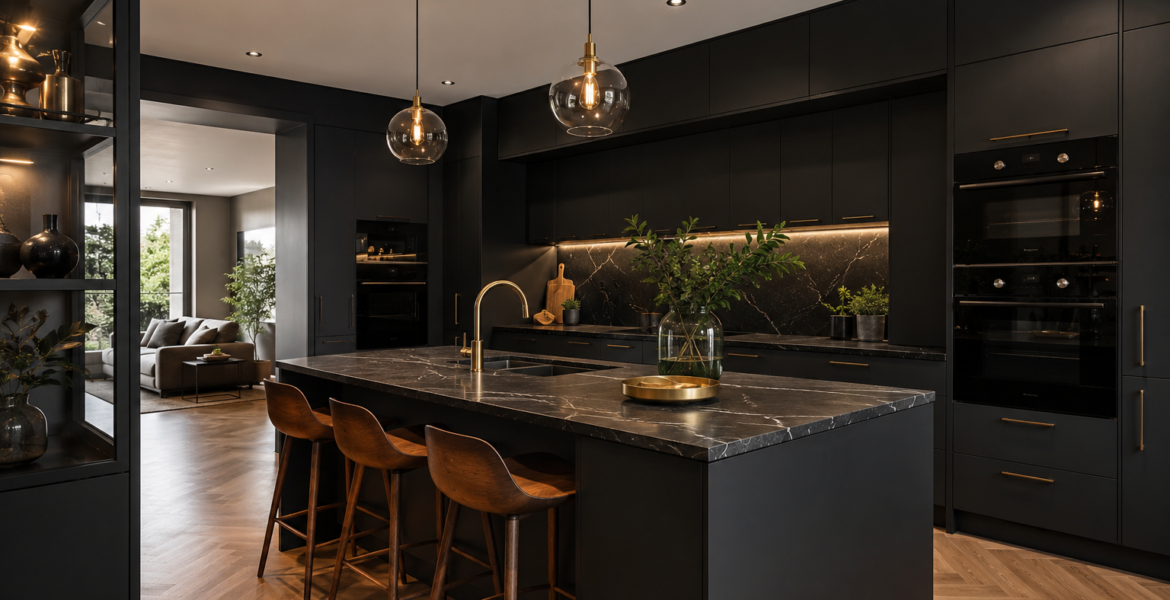
Black kitchens have moved far beyond the realm of dramatic show homes and glossy design magazines. Used thoughtfully, black cabinetry, worktops and finishes can create a kitchen that feels sophisticated, welcoming and surprisingly versatile.
Whether you live in a compact city flat, a Victorian terrace or a modern detached home, there are plenty of ways to introduce black without making the room feel dark or cramped. The key is to balance deeper tones with suitable lighting, contrasting materials and practical finishes.
Here are some inspiring black kitchen ideas to help you design a space that looks striking while still working beautifully for everyday life.
1. Choose the Right Black Kitchen Cabinets
Black kitchen cabinets can provide an elegant foundation for the entire room. However, not every black finish creates the same effect.
Matt black cabinetry offers a soft, contemporary appearance and tends to feel calmer than a high-gloss finish. It can work particularly well in open-plan kitchens where you want the units to blend into the surrounding living space.
Gloss black cabinets reflect light, making them useful in smaller kitchens, although fingerprints and smudges may be more noticeable. Textured finishes, such as woodgrain-effect doors painted black, add depth and can make a dark kitchen feel warmer.
Before making a final choice, order door samples and view them in your kitchen at different times of day. Natural and artificial lighting can change the appearance of black considerably. Some finishes have blue, brown or charcoal undertones, which may affect how they sit alongside your flooring and walls.
2. Balance Black with Warm Wood
Wood is one of the easiest ways to soften a black kitchen. Its natural colour and texture prevent the space from feeling overly formal or stark.
Consider combining black cabinets with:
- Oak worktops
- Timber shelving
- Wood-effect flooring
- A wooden dining table
- Slatted wall panelling
- Butcher’s block sections
Pale oak creates a fresh Scandinavian-inspired look, while walnut and darker woods produce a richer, more luxurious finish.
Solid timber worktops can require regular maintenance, particularly around sinks and food preparation areas. For a lower-maintenance alternative, choose a quality laminate or wood-effect porcelain surface. These materials can deliver a similar look without the same level of sealing and upkeep.
3. Add Contrast with Light Worktops
One of the most popular black kitchen ideas is pairing dark cabinets with pale worktops. The contrast defines the units and helps reflect light around the room.
White quartz is a practical choice for many UK households because it is durable, easy to clean and available in a wide range of patterns. A softly veined surface can provide the appearance of marble without some of the maintenance concerns associated with natural stone.
Other suitable options include:
- Pale granite
- Warm cream quartz
- Terrazzo
- Light concrete-effect surfaces
- Porcelain worktops
- White or ivory laminate
Pure white can create a crisp, modern result, while off-white, beige and light grey surfaces tend to feel warmer. If your kitchen receives limited daylight, a warmer worktop may stop the space from appearing cold.
4. Use Black on a Kitchen Island
You do not need to install an entirely black kitchen to embrace the trend. A black kitchen island can create a strong focal point while allowing the surrounding cabinets to remain light.
This approach works particularly well in larger kitchens and open-plan extensions. A black island can visually anchor the room, especially when paired with pale perimeter units.
To create a cohesive scheme, repeat the black finish elsewhere through smaller details, such as:
- Pendant lights
- Window frames
- Bar stools
- Cabinet handles
- Taps
- Appliances
Remember to plan the island around how you will actually use it. Allow enough room for people to move comfortably and open nearby cupboards and appliances. In most kitchens, a walkway of approximately one metre around the island provides comfortable circulation, although the ideal measurement will depend on the layout and household.
5. Introduce Black Through Smaller Features
If you are unsure about committing to black cabinetry, begin with smaller design elements.
Black taps, sinks, handles and light fittings can bring definition to a neutral kitchen without dominating the room. They are also easier and less expensive to replace if your tastes change later.
A black splash back can be particularly effective. Large-format tiles, dark stone or smoked glass can create a seamless backdrop behind the hob or sink. For a more traditional look, consider glossy black metro tiles with contrasting grout.
Practicality matters here. Dark, highly polished surfaces may show watermarks, grease and dust more clearly, so check cleaning requirements before buying.
6. Combine Black with Brass or Bronze
Black and brass make a naturally striking pair. Warm metallic details lift dark cabinetry and add a sense of refinement without requiring excessive decoration.
Brushed brass handles are often easier to maintain than highly polished finishes because they disguise fingerprints and minor marks. A brass tap, cooker hood trim or pendant light can provide a similar effect.
For something subtler, consider bronze, copper or aged metal finishes. These work especially well in period properties, shaker kitchens and schemes featuring natural stone or timber.
Avoid mixing too many metal finishes in one room. Two coordinated finishes are usually enough. For example, you might use brushed brass for handles and lighting, while keeping appliances and sockets in black or stainless steel.

7. Make Lighting a Priority
Lighting can make or break a black kitchen. Dark surfaces absorb more light than pale ones, so relying on a single ceiling fixture is rarely enough.
A successful lighting plan should include several layers:
- General ceiling lighting
- Task lighting beneath wall cabinets
- Pendant lights over an island or dining area
- Accent lighting inside glazed units or shelving
- Low-level lighting near plinths or flooring
Under-cabinet lighting is particularly important because it illuminates worktops where chopping, cooking and cleaning take place.
Choose a suitable colour temperature as well. Warm white lighting can make black cabinets feel inviting, while cooler bulbs may create a sharper, more clinical appearance. Always check that any electrical work complies with current UK regulations and is completed by an appropriately qualified professional where required.
8. Consider a Black Shaker Kitchen
Black does not have to mean ultra-modern. Shaker-style cabinets painted in charcoal, off-black or deep blue-black can look timeless, particularly in Victorian, Edwardian and rural homes.
Pair them with traditional features such as:
- Cup handles
- Belfast sinks
- Timber worktops
- Patterned floor tiles
- Glazed wall cabinets
- A range-style cooker
A softer shade, rather than absolute black, can help retain the character of the room. Colours with green, blue or grey undertones often respond beautifully to changing daylight.
For a more contemporary interpretation, choose slim shaker doors, simple handles and a pale quartz worktop.
9. Create a Monochrome Kitchen
A black and white kitchen is a classic choice, but the proportions need careful consideration. Too much contrast can make the room feel visually busy.
Instead of dividing the space equally, choose one colour as the main shade and use the other as an accent. For example, black base cabinets could be paired with white walls and worktops. This keeps the darker colour below eye level and helps the kitchen feel more open.
You can soften the contrast with intermediate tones such as light grey, warm stone or natural timber. Patterned tiles can also bridge the gap between black and white while adding personality.
10. Use Colour to Soften the Scheme
Black kitchens provide an excellent backdrop for colour. Dark cabinetry can make softer shades appear richer and more distinctive.
Popular combinations include:
- Black and sage green
- Black and dusty pink
- Black and deep navy
- Black and terracotta
- Black and warm cream
- Black and mustard yellow
Colour can be introduced through walls, tiles, seating, artwork or accessories. Greenery is another simple addition. Herbs, trailing plants and leafy houseplants bring life to dark surfaces and help the room feel less formal.
In a north-facing kitchen, warm colours such as clay, blush or cream can counteract cooler daylight. South-facing rooms can usually accommodate cooler greys, blues and crisp whites more comfortably.
11. Select Practical, Easy-Clean Finishes
A beautiful kitchen still needs to cope with cooking, spills, children, pets and busy mornings.
Before choosing black surfaces, consider how easily they show marks. Completely smooth matt doors may reveal fingerprints, while textured or anti-fingerprint finishes can be more forgiving.
Ask suppliers about:
- Scratch resistance
- Heat resistance
- Cleaning products
- Warranty terms
- Replacement door availability
- Resistance to fading
It is also worth testing samples with a damp cloth before ordering. This simple check can reveal whether a finish streaks or marks easily.
Black composite sinks are stylish, but hard-water deposits may be visible in some parts of the UK. Regular wiping and suitable cleaning products can help prevent a chalky build-up.
12. Avoid Making a Small Kitchen Feel Closed In
Black can work in a small kitchen, provided it is used strategically.
Keep walls and ceilings light, maximise natural daylight and avoid filling every available wall with dark cabinets. Open shelving or glazed units can create visual breathing space.
Other useful techniques include:
- Choosing reflective splashbacks
- Installing good under-cabinet lighting
- Using black on lower units only
- Selecting handleless doors for a cleaner look
- Continuing the same flooring into adjoining rooms
- Keeping worktops relatively clear
A compact kitchen does not need to be pale to feel spacious. It needs consistency, adequate lighting and a layout that avoids unnecessary visual clutter.
Final Thoughts
The best black kitchen ideas combine drama with balance. Black cabinets and surfaces can create a confident, timeless interior, but they work most effectively alongside thoughtful lighting, warm materials and practical finishes.
Start by considering the amount of natural light in the room, the size of the space and the level of maintenance you are comfortable with. From there, decide whether black should be the main feature or a supporting accent. Whether you choose a full matt-black kitchen, a charcoal shaker design or a single statement island, the result can feel elegant, comfortable and entirely suited to everyday British home life.


