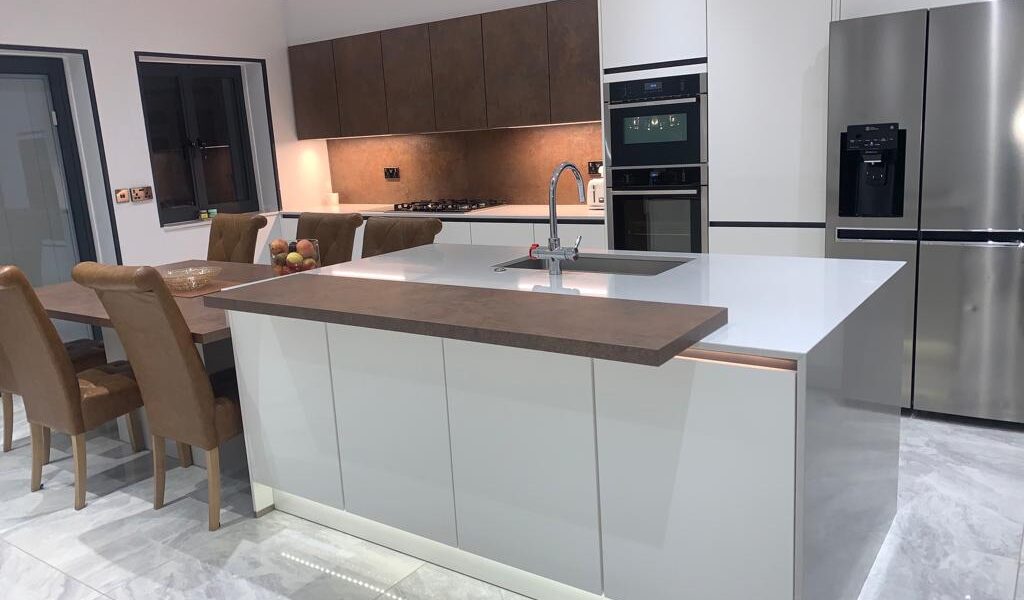
The best kitchen flooring achieves the right balance between durability, moisture resistance, ease of cleaning, and attractiveness. Since the kitchen is the heart of your home, making an informed choice ensures it stands the test of time while looking fantastic. Thankfully, there is a range of kitchen flooring options available nowadays, each suited to different lifestyles, budgets, and design preferences.
In this blog, we will explore the different types of kitchen flooring and share the key benefits they offer your space.
What Are the Kitchen Flooring Options?
Kitchen flooring has different options, each offering unique benefits and suited to different preferences and requirements. Common kitchen flooring options include:
Tile Flooring
Tile flooring is a preferred choice for the kitchen, with porcelain and ceramic tiles among the most commonly used. Both are available in a wide variety of colours, designs, and finishes, making them perfect for modern and traditional kitchen layouts. Tiles are durable, easy to clean, moisture-resistant, and hygienic.
Porcelain tiles are denser and water-resistant, making them ideal for kitchen floors, while ceramic tiles are less durable and ideally suited for splashbacks or low-traffic areas.
Hardwood Flooring
Hardwood flooring adds natural warmth and character to the kitchen, creating a timeless and elegant look. Popular hardwoods like oak, maple, and cherry offer unique grain patterns and colours that enhance kitchen aesthetics. With proper care, this type of flooring can last for decades while boosting property value.
Nevertheless, hardwood flooring in kitchens needs careful consideration because of its sensitivity to dampness and temperature. To preserve its appearance and durability, you can use protective finishes, clean up spills promptly, and maintain controlled humidity levels.
Laminate Flooring
Laminate flooring is widely chosen for kitchens due to its versatility, affordability, and ease of installation. Laminate is designed to resemble hardwood or stone, offering an attractive, more affordable alternative. It is relatively durable and needs less upkeep than natural wood floors.
While laminate flooring offers solid resistance to daily wear, it is more vulnerable to standing water and extended moisture exposure. For kitchens, water-resistant laminate is preferable to ensure greater longevity.
Vinyl Flooring
This type of kitchen flooring is one of the most practical choices, performing well in areas prone to spills and moisture and helping prevent damage over time. It is also durable against scratches and dents, ideal for busy households.
Vinyl flooring comes in various styles that mimic wood and stone. It is durable and needs only periodic sweeping and infrequent mopping.
Cork Flooring
Cork kitchen flooring is famous for its sustainability and eco-friendliness. Providing a cushioned, comfortable surface, this flooring makes a cosy atmosphere in the kitchen by retaining warmth, absorbing sound, and reducing noise. This is particularly beneficial in colder UK climates.
Despite these perks, cork flooring tends to be more vulnerable to moisture and wear than other kitchen flooring options. It might not be the best option for busy kitchens or areas prone to spills unless they are properly sealed and maintained.
Concrete Flooring
Concrete flooring is a modern kitchen flooring option with a customisable finish and colours that match different design styles. It can be stained, polished, or textured to complement a range of kitchen design styles, making it a popular choice for modern interiors.
This flooring is a practical and stylish choice for a modern kitchen due to its low maintenance and long lifespan. However, the concrete’s hard surface can feel uncomfortable underfoot for extended periods.
Things to Consider When Choosing Kitchen Flooring
Selecting the right kitchen flooring comprises assessing key factors to ensure lasting satisfaction and performance.
Durability
Durability is a key consideration, as kitchen flooring must endure high traffic, dropped items, and daily deterioration. Concrete, porcelain tile, and high-quality vinyl flooring are among the most durable options for kitchen settings.
Water Resistance
Since spills and moisture exposure are common, water resistance is a crucial feature for kitchen flooring. You can consider options such as porcelain tile, linoleum, granite, ceramic tile, limestone, and sandstone. They are highly water-resistant, which helps prevent damage from spills and moisture.
Ease of Maintenance
In today’s busy households, flooring that requires minimal maintenance is preferred. Bamboo flooring options, including strand-woven and engineered bamboo, offer a natural appearance with maintenance requirements comparable to those of other wood-based flooring materials.
Style and Aesthetics
Suppose you select flooring that is strong and long-lasting but has a poor aesthetic; it will definitely reduce your home’s value. Materials like marble, slate, and wood not only enhance kitchen aesthetics but also increase your home’s value.
Budget
Before selecting kitchen flooring material, consider your budget because natural stone and hardwood can be expensive. However, there are economical options available, such as vinyl, laminate, and cork, for a good balance of cost, durability, and appearance.
Conclusion
The kitchen is not just a space for cooking and meal preparation; it is a central part of the home that reflects lifestyle, functionality, and design preferences. Selecting the right flooring material is essential for durability, easy care, and lasting attractiveness. By considering factors such as water resistance, durability, style, and budget, homeowners can confidently select the ideal flooring by evaluating each option’s strengths and limitations.
For professional advice on kitchen flooring materials or complete installation services, Glam Kitchens offers expert guidance tailored to your home.